
- 033-2552-1334 & 9093085089
- info@gnim.org








HEALTH DEPARTMENT
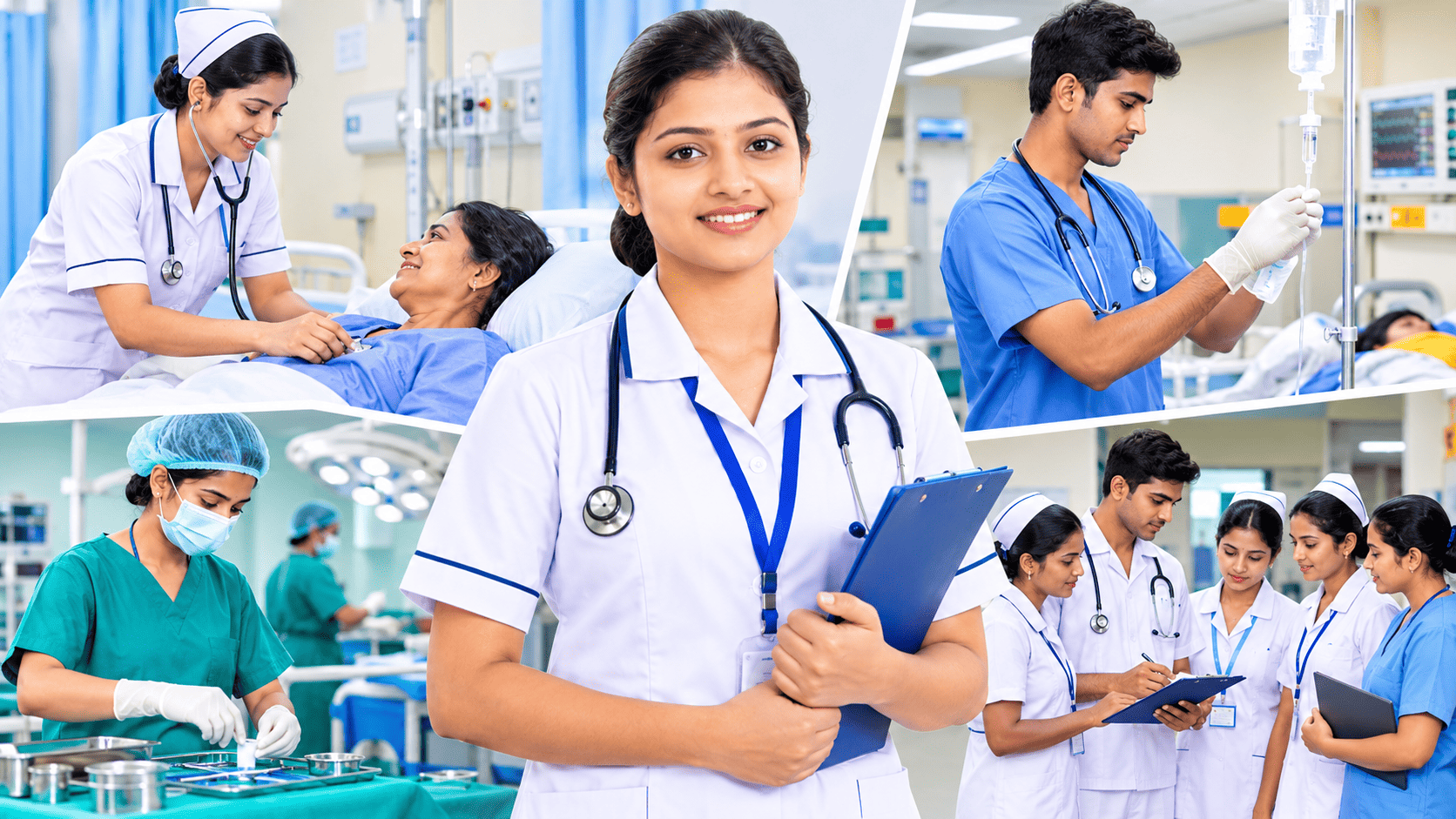
B.Sc. Critical Care Nursing
B.Sc. CRITICAL CARE NURSING
Designation: Critical Care Nurse
Course: Bachelor of Science in Critical Care Nursing (B.Sc. Critical Care Nursing)
Sector: Health Sector
Offered by: Gurukul National Institute and Management
Introduction
The Bachelor of Science in Critical Care Nursing, commonly referred to as B.Sc. Critical Care Nursing, is a specialised nursing programme designed for candidates who wish to develop professional knowledge and practical skills for caring for critically ill and medically complex patients.
Critical Care Nurses work as an important part of multidisciplinary healthcare teams and may provide nursing care to patients requiring close monitoring, intensive treatment, emergency support, and specialised clinical attention.
The programme focuses on developing knowledge of critical patient care, clinical assessment, emergency nursing, infection prevention, patient monitoring, and professional nursing practice.
The exact duration, curriculum, eligibility, clinical requirements, recognition, affiliation, examination pattern, and professional registration requirements are subject to the applicable academic and regulatory framework.
What is the Course?
B.Sc. Critical Care Nursing is a professional nursing programme that focuses on the principles and practices involved in caring for patients with serious or life-threatening medical conditions.
The course combines theoretical education with practical and clinical training. Students learn about patient assessment, monitoring of critically ill patients, emergency nursing procedures, infection control, medication management, intensive care practices, and communication with patients and their families.
The programme is intended to prepare candidates for professional responsibilities in critical care and other healthcare environments, subject to applicable qualification and professional requirements.
Definition and Purpose
Critical Care Nursing is a specialised area of nursing concerned with the care and continuous monitoring of patients who require intensive medical and nursing attention.
The purpose of the programme is to develop nursing professionals who can understand critical health conditions, identify changes in patient status, provide appropriate nursing care, follow clinical protocols, assist healthcare teams, and respond appropriately to emergencies.
The programme also aims to develop professional discipline, ethical conduct, communication abilities, clinical judgement, teamwork, and patient-centred care.
Course Curriculum
The curriculum generally combines fundamental nursing education with specialised critical care concepts and clinical practice.
Major areas of study may include:
Fundamentals of Nursing
Anatomy and Physiology
Pathology
Microbiology
Pharmacology
Medical-Surgical Nursing
Critical Care Nursing
Emergency Nursing
Intensive Care Nursing
Cardiac Care Nursing
Respiratory Care
Neurological Care
Trauma and Emergency Management
Infection Prevention and Control
Nutrition and Patient Care
Medical Ethics
Nursing Research
Healthcare Communication
Patient Safety
Clinical Nursing Practice
The exact subjects and curriculum may vary according to the applicable university, academic framework, regulatory requirements, and programme structure.
Subjects Covered
Students may study a broad range of subjects related to nursing, medicine, emergency care, and critical patient management.
Important subject areas may include critical care nursing, intensive care nursing, emergency nursing, medical-surgical nursing, anatomy, physiology, pathology, microbiology, pharmacology, infection control, nutrition, patient safety, healthcare communication, nursing research, and professional nursing practice.
Students are introduced to the principles of caring for patients whose conditions require continuous observation and specialised nursing support.
Practical Training
Practical and clinical training is an important component of professional nursing education.
During practical training, students may receive exposure to patient assessment, vital-sign monitoring, nursing procedures, infection-control practices, medication-related responsibilities, emergency response, patient documentation, critical patient observation, and communication with healthcare teams.
Depending on the applicable programme structure, students may receive clinical exposure in hospitals, intensive care units, emergency departments, critical care facilities, specialised healthcare units, and other approved clinical environments.
Practical training helps students develop confidence, clinical discipline, teamwork, communication skills, and the ability to work responsibly in demanding healthcare situations.
Eligibility Criteria
Admission to B.Sc. Critical Care Nursing is subject to the eligibility criteria prescribed by the applicable academic and regulatory authorities.
Candidates should verify the current educational requirements, minimum marks, required subjects, entrance or selection requirements, programme recognition, affiliation, clinical training requirements, and professional registration provisions before admission.
Who Can Enroll?
The programme may be suitable for candidates who have a strong interest in nursing, healthcare, emergency care, intensive care, patient management, and clinical services.
Candidates should be prepared to undertake theoretical education as well as practical and clinical training.
A willingness to work responsibly with patients, healthcare professionals, and multidisciplinary teams is important for candidates interested in a career in critical care nursing.
Admission is subject to fulfilment of the applicable eligibility and selection requirements.
Age Limit
The applicable minimum and maximum age requirements, if any, will depend on the rules prescribed by the relevant academic and regulatory authorities.
Candidates should verify the current age requirements at the time of application.
Educational Qualifications
Candidates must fulfil the educational qualification requirements applicable to B.Sc. Critical Care Nursing.
Depending on the programme structure and prevailing regulations, candidates may be required to have completed the prescribed higher secondary or equivalent qualification with specified subjects and minimum marks.
Candidates should verify the current eligibility requirements, required subjects, minimum marks, and other admission conditions before submitting an application.
Benefits of the B.Sc. Critical Care Nursing Course
The programme provides eligible candidates with significant educational and financial support under the applicable programme terms and conditions.
The course is completely free of charge for eligible candidates.
Free hostel accommodation is provided during the course, subject to availability and applicable hostel rules and conditions.
Eligible candidates receive a monthly stipend of Rs. 10,000 during the course, subject to the applicable terms and conditions.
An annual scholarship of Rs. 40,000 is awarded for each year of the programme to eligible candidates, subject to the applicable scholarship conditions.
There is also an opportunity for immediate employment after successful completion of the course. Employment opportunities are subject to successful completion of the programme, professional eligibility, applicable registration requirements, availability of vacancies, employer requirements, document verification, and the relevant selection process.
These benefits can help eligible candidates reduce the financial burden associated with professional education while focusing on their studies, practical training, and professional development.
Career Opportunities
After successful completion of the programme and fulfilment of all applicable professional requirements, candidates may explore career opportunities in different healthcare environments.
Potential career areas may include:
Critical Care Nurse
Intensive Care Nurse
Hospital Nurse
Emergency Care Nurse
Clinical Nurse
Critical Care Unit Nurse
Intensive Care Unit Nurse
Emergency Department Nurse
Specialised Hospital Nursing Services
Cardiac Care Units
Trauma Care Units
Healthcare Clinics
Specialised Medical Centres
Hospitals and Healthcare Organisations
Home Healthcare Services
The actual job designation and employment opportunities will depend on the candidate's qualification, professional registration, experience, employer requirements, vacancies, and applicable regulations.
Skill Development
The programme is designed to develop professional and clinical skills required for nursing practice and critical patient care.
Key skills may include:
Critical Patient Care
Patient Assessment
Vital-Sign Monitoring
Emergency Nursing
Intensive Care Practices
Clinical Observation
Infection Prevention and Control
Medication Safety
Patient Documentation
Emergency Response
Communication Skills
Teamwork and Coordination
Patient and Family Communication
Professional Ethics
Time Management
Clinical Decision-Making
Patient Safety
These skills can help candidates develop a professional foundation for working in critical care and other healthcare environments.
Why Choose GNIM for this Course?
Gurukul National Institute and Management aims to provide eligible candidates with access to career-oriented educational opportunities along with financial and residential support.
The key benefits include a completely free course, free hostel accommodation, a monthly stipend of Rs. 10,000 during the course, and an annual scholarship of Rs. 40,000 for each year of the programme, subject to applicable terms and conditions.
GNIM also seeks to support candidates in understanding the admission process, course requirements, practical learning opportunities, and potential career pathways.
Candidates should independently verify the applicable course recognition, affiliation, eligibility, examination, clinical training, professional registration, stipend, scholarship, and employment conditions before admission.
Placement Confirmation
Gurukul National Institute and Management maintains collaborative relationships with leading government-recognized organizations and aims to provide eligible candidates with access to high-quality employment opportunities.
After successful completion of the programme, eligible candidates may be considered for available employment opportunities through the applicable placement or recruitment process.
Employment is subject to successful completion of the course, fulfilment of professional and registration requirements where applicable, availability of vacancies, employer eligibility criteria, document verification, and the employer's selection process.
Placement assistance or employment opportunities should therefore be understood as an opportunity for consideration and recruitment rather than an unconditional guarantee of employment for every candidate.
How to Enroll / Admission Process
Candidates interested in B.Sc. Critical Care Nursing should follow the official admission process of Gurukul National Institute and Management.
Only our official website: www.gnim.org
No Offline application has been received.
Candidates are advised to use only the official GNIM website for application-related information and should avoid relying on unofficial sources or unauthorized intermediaries.
Application Procedure
Interested candidates can apply online through the GNIM website:
Candidates should visit the official website and review the available course information and eligibility requirements.
Applicants should complete the online application form accurately, provide the required information and documents, and follow the instructions provided during the application process.
Candidates should carefully verify all information before submitting their application.
Final admission and selection will be conducted according to the applicable programme requirements and selection criteria.
Conclusion
B.Sc. Critical Care Nursing can provide a professional foundation for candidates interested in nursing, intensive care, emergency healthcare, and specialised patient care.
Through theoretical education, practical training, clinical exposure, and professional skill development, the programme can help candidates prepare for potential career opportunities in hospitals, critical care units, emergency departments, specialised healthcare facilities, and other healthcare environments.
With the stated benefits of a completely free course, free hostel accommodation, Rs. 10,000 monthly stipend, Rs. 40,000 annual scholarship, and opportunities to explore employment after successful completion, the programme can provide eligible candidates with valuable support for pursuing a professional career in the Health Sector.
Candidates are advised to verify all eligibility, recognition, affiliation, clinical training, examination, professional registration, scholarship, stipend, and employment conditions before admission.
Call to Action
Build Your Professional Career in Critical Care Nursing
Take the first step towards a professional career in the Health Sector.
Apply Online Only Through the Official GNIM Website
Website: www.gnim.org
Contact: +91 9093085089
WhatsApp Available
Gurukul National Institute and Management
Our Gallery


Our Course Collaborating Institutes


Our Placement Collaborating Organization


.png)
.png)
.png)
.jpg)

.jpg)