
- 033-2552-1334 & 9093085089
- info@gnim.org








HEALTH DEPARTMENT
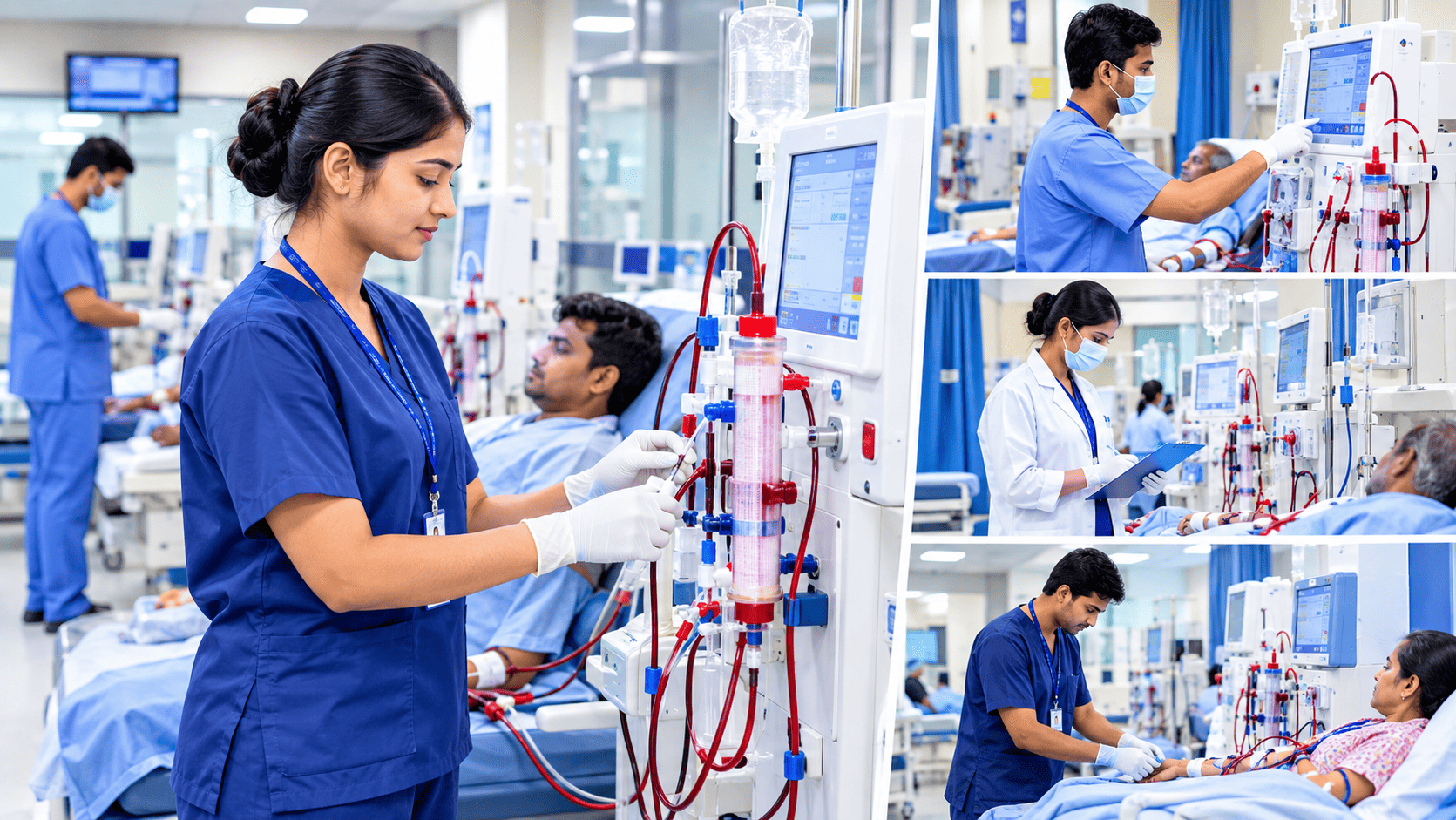
B.Sc. Dialysis Therapy Technology
DIALYSIS TECHNOLOGIST
B.Sc. Dialysis Therapy Technology
Sector: Health Sector
Introduction
Gurukul National Institute and Management offers the B.Sc. Dialysis Therapy Technology course for candidates who aspire to build a professional career in the healthcare sector. This program is designed to provide students with academic knowledge, technical skills, and practical exposure related to dialysis therapy and the operation of dialysis equipment.
Dialysis Technologists play an important role in supporting patients undergoing dialysis treatment and in assisting healthcare professionals in maintaining safe and effective dialysis procedures. The course can help students develop the knowledge and practical abilities required for employment in hospitals, dialysis centres, diagnostic and healthcare facilities, and other relevant healthcare organizations.
What is the Course?
B.Sc. Dialysis Therapy Technology is an undergraduate healthcare program focusing on dialysis procedures, renal care, dialysis equipment, patient monitoring, infection control, and related clinical practices.
The program combines classroom-based learning with practical and clinical training. Students learn about the human body, kidney function, renal diseases, dialysis technology, patient care, and the safe operation and maintenance of dialysis-related equipment.
Definition and Purpose
Dialysis Therapy Technology is a specialized area of healthcare concerned with supporting the treatment of patients whose kidneys are unable to perform their normal functions adequately.
The primary purpose of this course is to develop trained professionals who understand dialysis procedures and can work effectively as part of a healthcare team. Students are introduced to the principles of haemodialysis, patient preparation, dialysis machine operation, monitoring during treatment, infection prevention, emergency procedures, and post-dialysis care.
Course Curriculum
The curriculum is designed to provide a balanced combination of theoretical education, laboratory learning, and practical clinical exposure.
Major areas of study may include human anatomy and physiology, biochemistry, pathology, microbiology, pharmacology, renal diseases, dialysis technology, haemodialysis procedures, patient care, infection control, biomedical equipment, and healthcare management.
The curriculum may also include clinical training designed to familiarize students with the actual working environment of hospitals and dialysis units.
Subjects Covered
The major subjects and academic areas generally associated with B.Sc. Dialysis Therapy Technology include:
Human Anatomy
Human Physiology
Biochemistry
Pathology
Microbiology
Pharmacology
General Medicine
Renal Diseases and Nephrology
Fundamentals of Dialysis Technology
Haemodialysis Technology
Dialysis Equipment and Machines
Dialysis Procedures
Patient Care and Monitoring
Infection Prevention and Control
Medical and Surgical Emergencies
Nutrition and Renal Diet
Medical Ethics and Patient Communication
Hospital and Healthcare Management
Biomedical Equipment and Safety
Clinical Training and Internship
The exact subjects, semester structure, practical hours, and clinical requirements may vary according to the applicable academic and regulatory framework.
Practical Training
Practical training is an important component of Dialysis Therapy Technology education. Students receive practical exposure to the working procedures associated with dialysis units and healthcare facilities.
Training may include preparation of dialysis equipment, understanding dialysis machines and consumables, patient preparation, monitoring vital signs, assisting with dialysis procedures, maintaining infection-control practices, documentation, equipment safety, and responding appropriately to clinical situations under professional supervision.
Practical and clinical exposure helps students understand how theoretical knowledge is applied in real healthcare environments.
Eligibility Criteria
Eligibility requirements may vary according to the applicable university, academic authority, and program regulations. Candidates should verify the current admission requirements before submitting an application.
Who Can Enroll?
The course is suitable for students who have an interest in healthcare, medical technology, patient care, renal healthcare services, and hospital-based professional careers.
Candidates should have an interest in working in a clinical environment and should be prepared to follow healthcare safety, hygiene, ethical, and professional standards.
Age Limit
The applicable minimum and maximum age requirements may depend on the admission rules and academic regulations associated with the program.
Candidates are advised to check the current eligibility and age requirements at the time of application.
Educational Qualifications
Candidates who wish to pursue B.Sc. Dialysis Therapy Technology should generally have completed the required higher-secondary level education, preferably with Science subjects, particularly Biology or other subjects specified by the applicable academic authority.
The final eligibility criteria will be determined according to the applicable university or regulatory requirements for the program.
Benefits of the Course
The B.Sc. Dialysis Therapy Technology program provides candidates with an opportunity to develop specialized knowledge and practical skills in an important area of healthcare.
Through the program, students can gain exposure to dialysis technology, renal care, patient monitoring, infection control, healthcare procedures, and professional workplace practices.
In addition to the academic and professional benefits, candidates enrolling through the applicable GNIM program are offered the following benefits, subject to the applicable terms and conditions:
The course is completely free of charge.
Free hostel accommodation is provided.
A monthly stipend of Rs. 10,000 is provided during the course.
An annual scholarship of Rs. 40,000 is awarded for each year of the program.
There is an opportunity for immediate employment upon successful completion of the course.
These benefits can significantly reduce the financial burden associated with professional education and accommodation while allowing eligible candidates to focus on their studies and professional development.
Career Opportunities
After completing the B.Sc. Dialysis Therapy Technology program and meeting the applicable professional and employment requirements, graduates may explore career opportunities in healthcare organizations and dialysis-related facilities.
Potential job roles and areas of employment may include:
Dialysis Technologist
Dialysis Technician
Renal Care Technician
Dialysis Unit Technician
Clinical Dialysis Technician
Renal Care Support Professional
Healthcare Technician
Graduates may seek opportunities in hospitals, dialysis centres, renal care facilities, healthcare organizations, and other institutions where dialysis technology professionals are employed.
Employment opportunities depend on the candidate's qualifications, practical skills, applicable registration or regulatory requirements, institutional requirements, and available vacancies.
Skill Development
During the course, students can develop a range of technical and professional skills, including:
Understanding of kidney function and renal diseases
Knowledge of dialysis principles and procedures
Operation and understanding of dialysis equipment
Patient preparation and monitoring
Understanding of vital signs and patient observations
Infection prevention and control practices
Healthcare documentation
Basic emergency-response awareness
Safe handling of medical equipment and consumables
Communication with patients and healthcare professionals
Professional ethics and workplace discipline
Teamwork in a clinical environment
Why Choose GNIM for This Course?
Gurukul National Institute and Management focuses on providing career-oriented educational opportunities to eligible candidates.
The B.Sc. Dialysis Therapy Technology program is particularly relevant for students seeking specialized healthcare education combined with practical exposure and career-oriented training.
Eligible candidates can also benefit from the financial support associated with the program, including free course education, free hostel accommodation, a monthly stipend of Rs. 10,000, and an annual scholarship of Rs. 40,000 for each year of the program, subject to the applicable terms and conditions.
The combination of academic learning, practical training, and career-oriented support can help candidates prepare for professional opportunities in the healthcare sector.
Placement Confirmation
It is worth noting that Gurukul National Institute and Management offers high-quality job opportunities by maintaining collaborative relationships with leading government-recognized organizations.
The program is designed with a career-oriented approach so that eligible candidates can receive appropriate guidance and opportunities following successful completion of their training.
Employment is subject to successful course completion, applicable eligibility requirements, performance, organizational recruitment procedures, available vacancies, and the terms and conditions applicable to the respective employment opportunity.
Candidates should carefully review the specific placement and employment terms applicable to their program before admission.
How to Enroll / Admission Process
Candidates interested in the B.Sc. Dialysis Therapy Technology program must complete the application process through the official GNIM website.
Only our official website: www.gnim.org
No offline application has been received.
Candidates should use the official website for current admission information, eligibility requirements, application instructions, and other relevant updates.
Application Procedure
Interested candidates can apply online through the GNIM website:
Candidates should visit the official website, review the course and eligibility information, complete the online application form with accurate information, and submit the required details according to the instructions provided on the website.
Candidates should ensure that all information submitted during the application process is accurate and that they follow the applicable admission procedure.
Conclusion
B.Sc. Dialysis Therapy Technology is a specialized undergraduate healthcare program for candidates who wish to develop professional knowledge and technical skills in dialysis and renal healthcare services.
The course provides opportunities to study dialysis technology, renal diseases, patient care, clinical procedures, infection control, medical equipment, and healthcare practices. Practical and clinical exposure can further help students understand the professional responsibilities associated with working in dialysis and healthcare environments.
For eligible candidates, the GNIM program provides significant educational and financial support, including completely free course education, free hostel accommodation, a monthly stipend of Rs. 10,000, and an annual scholarship of Rs. 40,000 for each year of the program, subject to applicable terms and conditions.
Candidates interested in building a career in the healthcare sector can visit the official GNIM website and complete the online application process.
Call to Action
For admission information and assistance, contact:
+91 9093085089
WhatsApp Available
Apply Online Only: www.gnim.org
Our Gallery


Our Course Collaborating Institutes


Our Placement Collaborating Organization


.png)
.png)
.png)
.jpg)

.jpg)